

As Sotheby’s New York hosts another landmark Fashion Icons sale, Emma Reynolds hears how collectors help to preserve haute-couture and pieces that tell stories beyond style
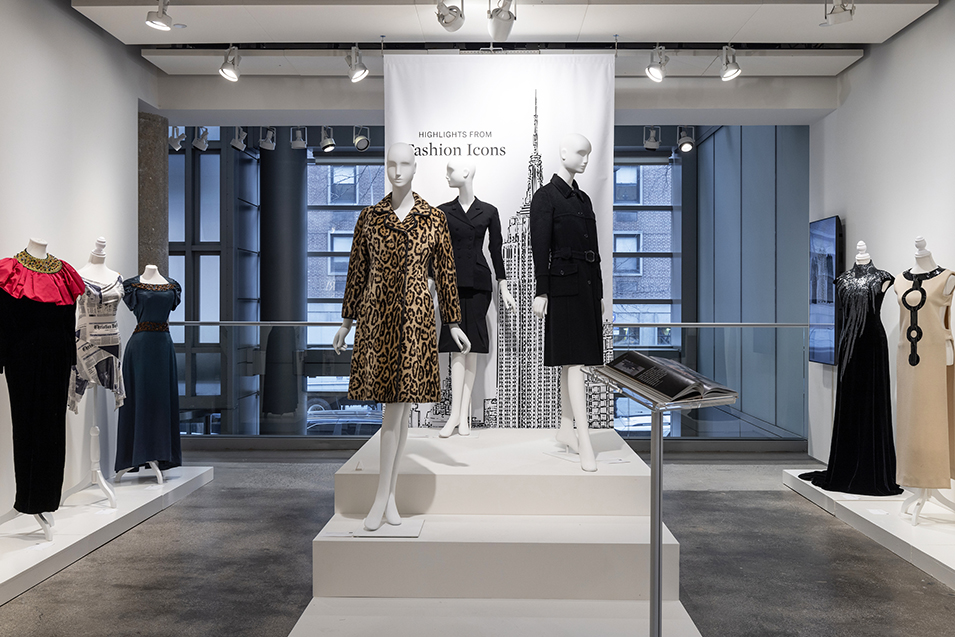 Sotheby’s Fashion Icons Exhibition, 2024. Photos: Courtesy of Sotheby’s
Like art, literature or theater, fashion captures what words cannot. More than just a form of expression, fashion is a cultural and economic force that reflects moments in history.
Collectors are especially attuned to fashion’s quiet power: those rare moments when a garment becomes a symbol or statement. In 2023, Princess Diana’s now-iconic sheep sweater sold at Sotheby’s for US$1.14 million, setting a new record for any Diana-worn garment, and for any sweater ever sold at auction. The red knit famously featured a single black sheep among a flock of white ones, perhaps a subtle and silent signal of how Diana already felt when she wore it in 1981, the year of her marriage to Prince Charles. Whether an item has celebrity provenance or not, fashion collectors understand they are acquiring a piece of history.
Some pieces are quietly political, others are more personal, or document changing tastes. Cristóbal Balenciaga revolutionized the female silhouette in the 1950s and 1960s by rejecting rigid tailoring in favor of volume, movement and sculptural lines. Christian Dior’s ‘New Look’ of 1947 revolutionized the way women dressed post-World War II, championing glamor through ultra-feminine silhouettes. Both Balenciaga and Dior were significant changemakers, which led their designs to become highly collectible.
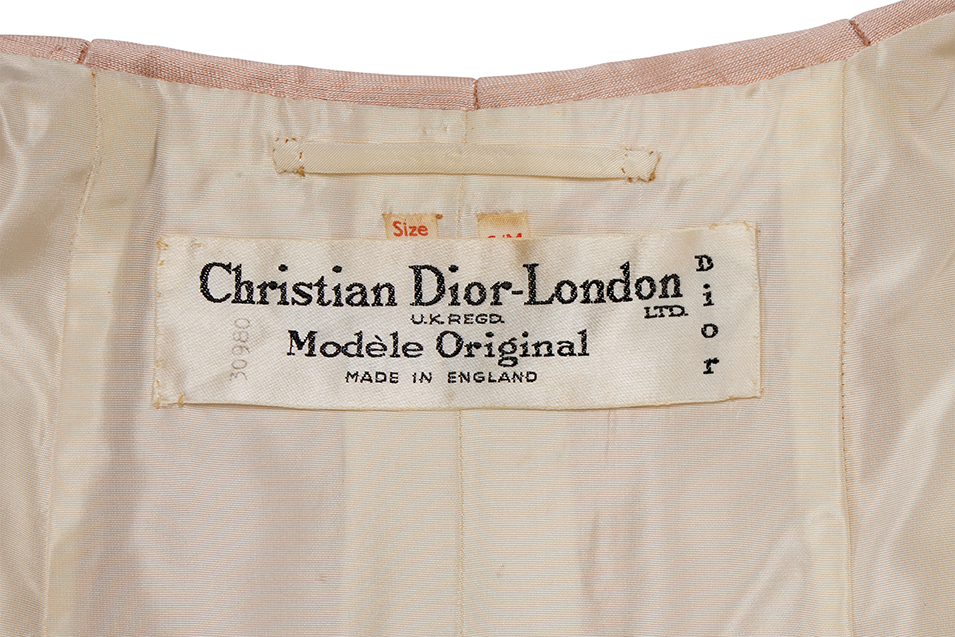 Christian Dior Cocktail Ensemble, Spring-Summer 1961 (label). Photo: Courtesy of Sotheby’s
Few know the market better than Lucy Bishop, a specialist in handbags and fashion at Sotheby’s. After spending 15 years in the fashion and auction world in London, she currently leads the category from New York. “Fashion collecting is still quite niche,” Bishop says. “It has grown in popularity over the years, especially as more auction houses recognize its value. However, only the best and rarest pieces are suitable to be sold.”
Collectors are incredibly varied, she notes, not just by geography, but in taste, approach and intention. One rising trend Bishop has seen across the board is a surge of interest in archival fashion, particularly pieces by John Galliano. “Museums and serious collectors are aggressively acquiring his pieces,” she says. “He’s easily the most sought-after designer right now, especially on the red carpet.”
Since Sotheby’s launched its Fashion Icons auction in 2023, the category has grown rapidly. Standout lots have included one-of-a-kind pieces from the personal wardrobes of the inimitable Carolyn Bessette-Kennedy, as well as Madonna, Michelle Obama, and Sarah Jessica Parker.
 Christian Dior Haute Couture Green and Black Striped Zibeline Evening Gown, Autumn-Winter 1968-69. Photo: Courtesy of Sotheby’s.
This summer, the upcoming and highly anticipated auction “The Art of Glamour: The Collection of Alixandra Fitzwilliam-Tate Baker, Baroness of Gray,” will highlight the private collection of the American-born couture enthusiast. The auction opened for bidding on June 2 and will run through June 16, with a concurrent public exhibition at Sotheby’s New York.
Fitzwilliam-Tate Baker trained at École Lesage in Paris and spent decades acquiring more than 100 gowns and museum-quality haute couture pieces from Dior, Givenchy, Balenciaga, and Yves Saint Laurent. “She collects haute couture the way others collect art,” Bishop says. “She appreciates the workmanship.”
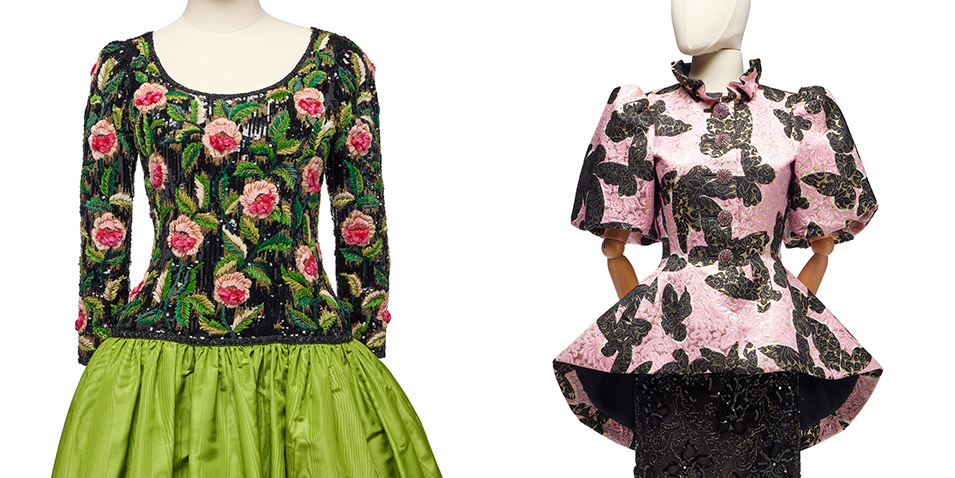 Yves Saint Laurent Haute Couture. Left: Lesage Embroidered Ballgown, Autumn-Winter 1974-7. Right: Pink and Black Brocaded Cocktail Ensemble, Spring-Summer 1995. Photos: Courtesy of Sotheby’s
Like connoisseurs of fine art or rare books, fashion collectors vary in how they live with their pieces. Some tuck them away in archives, while others wear them. Some are devoted to one designer or decade, while others build a wardrobe based on their personal aesthetic and style. Fitzwilliam-Tate Baker’s taste is expressive and bold, and her love of embroidery, embellishment and bright color is woven throughout this collection.
 Audrey Hepburn’s Hubert de Givenchy Haute Couture. Left: Ivory Silk Faille Bodice, 1960s. Right: Pink Silk-Crêpe Sheath, Autumn-Winter 1966-67. Photos: Courtesy of Sotheby’s
“Two of the Baroness’s favorite decades were the 1960s and 1980s, the most decadent years of the 20th century,” says Bishop. “The collection is so joyful. It is wonderful to see these pieces and think of the fabulous events they were worn to, during a time when people would really dress for an occasion. I think we are beginning to see a return to glamor in contemporary fashion—people want to have fun and find ways to escape the monotony of the every day. There is no better way to do that than through fashion.”
Collectors play a vital role in safeguarding the legacy of couture fashion. More than just objects of beauty, garments can be records of identity, power and cultural change. Passionate collectors don’t just own these pieces, they help preserve history.
“The Art of Glamour: The Collection of Alixandra Fitzwilliam-Tate Baker, Baroness of Gray” is part of New York Luxury Week, presented in partnership with Sotheby’s International Realty.
Our Collecting Focus series also features expert advice on jewelry, watches, wine, historic books, modern and contemporary prints, and Americana.